

White hat link building means earning backlinks through content and outreach so genuinely useful that other sites would link to them regardless of any ranking benefit. It's slower than buying links and far more durable, with most sites seeing measurable movement in 2 to 6 months depending on domain strength and competition. Done right, it also builds the kind of brand visibility that AI tools and LLM-based search now lean on when deciding what to cite.
TL;DR:
- Building high-quality backlinks from original data, research, or useful tools takes longer but results in more durable links that can last for years.
- Reclaiming unlinked brand mentions and fixing broken links are low-cost, high-yield tactics that can generate links within days or weeks if done consistently.
- Prioritizing relevance, authority, and natural content context helps ensure the backlinks you pursue are meaningful and avoid penalties from spammy link schemes.
- Automated platforms that produce and promote genuine content can scale white hat link building effectively while maintaining transparency and editorial quality.
Table of Contents
- What Counts as White Hat Link Building?
- White Hat vs. Gray Hat vs. Black Hat: What's the Real Difference?
- Proven White Hat Link Building Techniques That Actually Work
- How Do You Know if a Backlink Is Actually Worth Pursuing?
- A 4-Step System for Running a White Hat Link Building Program
- Common Mistakes and Vendor Red Flags to Watch For
- How Getautopilotseo Approaches Ethical Link Building
- How Long Does White Hat Link Building Take to Show Results?
- Why I'd Rather Wait Six Months for a Real Link
- Get Ethical Backlinks Without the Outreach Grind
- Sources
What Counts as White Hat Link Building?
Google's own link spam policies draw the line clearly: any link scheme built primarily to manipulate rankings is against the rules, no matter how it's dressed up. White hat link building flips that logic. You create something worth linking to, and other sites link to it because it helps their readers, not because you paid for the placement or begged for it.
The practical test is simple. Ask yourself: would this link exist if search engines didn't exist at all? A local bakery linking to a supplier's flour-sourcing guide because it's genuinely helpful passes. A "resource page" stuffed with 200 unrelated links from a link-building vendor does not. That single question filters out most of the gray-area tactics that get sites penalized.
This approach also happens to be why white hat backlinks compound instead of decay. A guest post that ranks well today because of a Google algorithm quirk can vanish overnight when that quirk gets patched. A link earned because a journalist cited your original research tends to stick around for years, and it keeps sending referral traffic long after the initial campaign ends. That resilience is the entire argument for white hat SEO techniques over shortcuts: an ethical link is an investment, not a rented placement.
There's a newer wrinkle worth naming here too. AI-driven answer engines and LLM-based summaries increasingly treat backlinks and mentions as trust signals when deciding which sources to cite or summarize. A site with a thin, spammy link profile doesn't just risk a Google penalty. It risks being invisible in the tools millions of people now use instead of a traditional search bar. That's a second, quieter reason ethical link acquisition matters more in 2026 than it did five years ago.
White Hat vs. Gray Hat vs. Black Hat: What's the Real Difference?
The three categories aren't just a spectrum of "riskiness." They're different answers to the question of whether a link earns its place.
White hat looks like: a broken-link outreach email that offers a genuinely better replacement resource, a data study that a journalist cites because it's the best number available, or a guest post written for a niche publication's actual readers rather than as a link vehicle.
Gray hat looks like: guest posting at scale on any site that accepts a check, reciprocal link exchanges dressed up as "partnerships," or paying an influencer to drop a follow link inside unrelated content.
Black hat looks like: link farms, private blog networks, and automated link injection through comment spam or hacked sites.
Google's spam guidance specifically flags a few patterns as textbook link spam:
- Buying or selling links that pass ranking credit, whether cash, product, or a "free" service changes hands.
- Excessive reciprocal link exchanges ("link to me and I'll link to you") done purely for SEO.
- Automated link generation through bots, scrapers, or software that mass-creates backlinks.
- Low-value directory and footer links added site-wide with no editorial judgment behind them.
The risk isn't abstract. Sites caught in large-scale link schemes have seen rankings collapse within days of a manual action, and recovery can take months even after the links are removed or disavowed. That's a steep price for a shortcut that might have saved a few weeks of outreach.
Proven White Hat Link Building Techniques That Actually Work
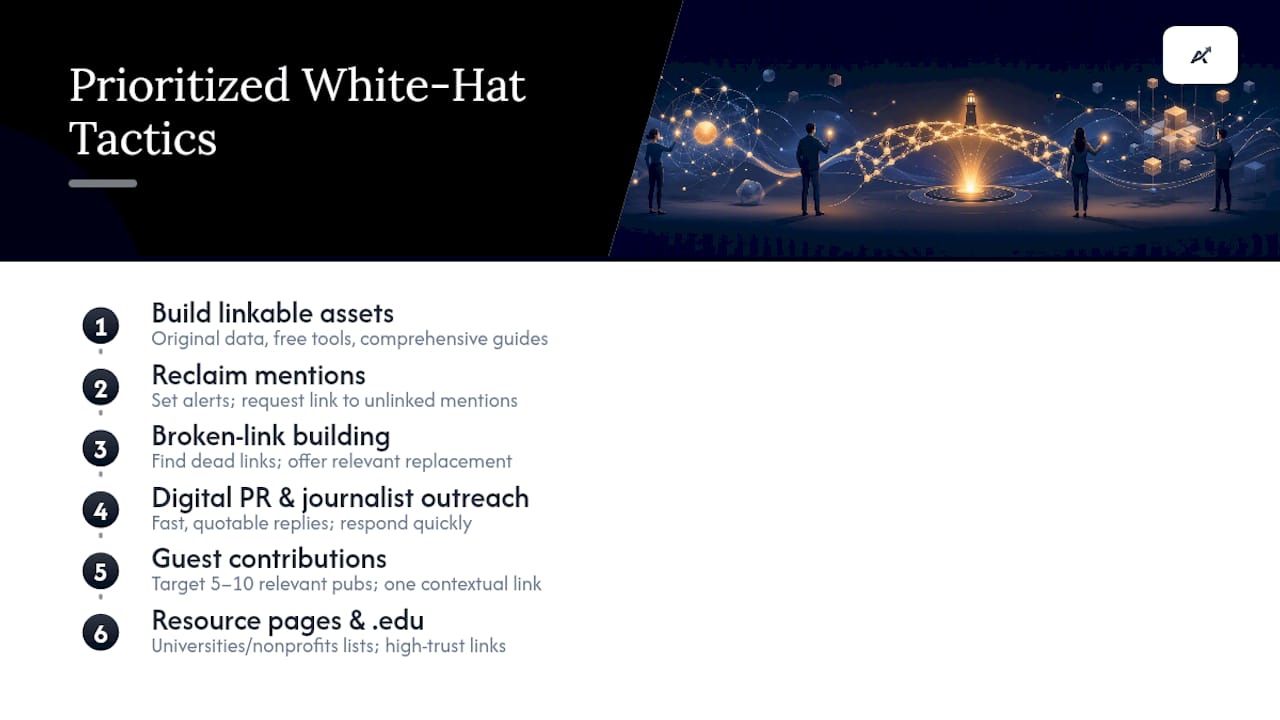
Not every tactic deserves equal time. Some earn links fast with modest effort. Others take real investment but build a link profile competitors can't easily replicate. Here's a prioritized rundown.
1. Build linkable assets first. Original data studies, free tools, and genuinely comprehensive guides consistently pull in the most editorial links because journalists and industry writers need primary sources to cite. If you survey 500 customers, run an experiment, or aggregate data no one else has published, you've created something other writers can't get anywhere else. Promote it through direct outreach to writers who cover your niche, not mass blasts.
2. Reclaim unlinked brand mentions. This is often the fastest win on the list. If a site already wrote your company's name without linking it, you're not asking for a favor, you're asking them to finish a sentence they started. Set up a Google Alert or a mention-tracking tool, then send a short, specific email: "Loved the piece on [topic] and noticed you mentioned [brand] — would you mind linking to our page on [X] for readers who want more detail?" This tactic is consistently rated as one of the lowest-effort, highest-yield moves in white hat link building.
3. Run broken-link building campaigns. Find dead links on resource pages in your niche using a crawler tool, confirm the page is actually gone, then reach out offering your own content as the replacement. This only counts as white hat when your suggested page is a real, relevant fix for the linking site's problem, not a thin excuse to get a link. Done honestly, it solves a real maintenance headache for site owners, which is exactly why they say yes.
4. Pitch digital PR and journalist outreach. HARO shut down in 2025, and several new platforms have stepped in to fill that gap for reporters looking for sources. The mechanics haven't changed much: journalists want fast, specific, quotable answers, not a marketing pitch. If you can respond within a couple of hours with a real statistic or a sharp quote tied to breaking news in your industry, you'll out-compete slower responders every time.
5. Write guest contributions with intent, not volume. Pick five to ten publications your actual customers read, not five hundred sites that accept anything. Offer a piece with a genuinely new angle, not a rehash, and let one contextual link sit naturally inside the body where it helps the reader, not stuffed into an author bio nobody reads.
6. Target resource pages and .edu opportunities. Many universities, nonprofits, and industry associations maintain curated resource lists. A search for "resources" + your niche + inurl:edu turns up pages that already do the curation work for you. These links carry outsized trust because .edu domains are rarely part of a for-profit link economy.
7. Participate in relevant communities like Reddit and Quora. Answer questions where your expertise genuinely helps, and only link when it's the natural next step for that specific reader. A comment history full of link-dropping gets banned fast. A comment history full of useful, unlinked advice earns you a reputation, and eventually organic citations from people who found your answer helpful.
8. Syndicate content with canonicalization. Republishing a piece on a larger platform can extend its reach, but set a canonical tag pointing back to your original so search engines know where the content lives first. Skipping this step risks duplicate-content confusion that undercuts the very SEO value you're chasing.
Prioritize the easy wins first: mention reclamation and broken-link building typically need a few hours per successful placement. Save the bigger investments, original research and multi-week digital PR campaigns, for when you have the bandwidth to do them properly, since a rushed data study with weak methodology won't earn the citations a solid one will.
Pro Tip: Batch your outreach by asset, not by target. Build one strong data page or tool, then spend a month pitching it to fifty relevant writers, rather than juggling five half-finished campaigns at once. Focus beats volume in ethical link acquisition.
How Do You Know if a Backlink Is Actually Worth Pursuing?
Not every link is worth the outreach hours it takes to earn. A quick quality check saves you from chasing placements that do nothing for rankings or referral traffic.
Run every prospect through this checklist:
- Relevance: Does the linking site cover topics your actual audience cares about, or is the overlap a stretch?
- Authority proxies: Does the domain show real organic traffic and a history of ranking for competitive terms, not just a high number on a single third-party metric?
- Editorial context: Is the link surrounded by real, readable content, or dropped into a sidebar, footer, or list with dozens of unrelated links?
- Traffic potential: Would a human reader actually click this link and land on a page relevant to them?
- Link type: Is it a natural follow link, or a nofollow/sponsored tag that still sends relevant traffic even without passing ranking credit?
For a fast filter when you're triaging a long prospect list, ask three questions in order: Does this site's audience overlap with mine? Would I trust a recommendation from this publisher? Is there an actual person editing this page? Two "yes" answers out of three usually means the link is worth pursuing.
Don't dismiss nofollow or sponsored links outright. A nofollow link from a high-traffic publication can drive real visitors and brand exposure even without passing direct ranking value, and a link profile that's 100% follow links from anonymous blogs looks far more suspicious to Google than one with a natural mix of link types.
A 4-Step System for Running a White Hat Link Building Program
Random outreach produces random results. A structured pipeline turns link building from a one-off campaign into a repeatable channel.
-
Audit your current backlink profile. Pull your existing links using a backlink tool, note your strongest referring domains, flag anything that looks spammy or unnatural, and record a baseline: total referring domains, average domain authority of those links, and current rankings for your priority keywords. This baseline is what you'll measure progress against.
-
Build an opportunity pipeline. Set up ongoing monitoring for unlinked brand mentions, run a monthly broken-link scan in your niche, compile a list of resource pages you qualify for, and subscribe to journalist query platforms relevant to your industry. Feed all of it into one tracking spreadsheet or CRM so nothing falls through.
-
Package your assets for outreach. Turn raw data into a shareable page with clear charts, a summary journalists can quote directly, and a short pitch email template you can customize per contact in under two minutes. The faster you can personalize an outreach message, the more you can send without it feeling like spam.
-
Execute outreach and track outcomes. Log every pitch sent, every response, and every link earned. Realistic response rates for cold outreach tend to run low, often in the single digits, so volume and follow-up matter as much as pitch quality. Measure success against your baseline every 60 to 90 days: referring domains gained, keyword movement, and referral traffic from new links, not just the raw count of emails sent.
Common Mistakes and Vendor Red Flags to Watch For
The fastest way to undo months of ethical link building is one bad vendor relationship or one shortcut taken under deadline pressure.
Watch for these mistakes:
- Buying "guest post packages" that place your content on dozens of low-quality sites in a single week.
- Accepting a vendor's offer of guaranteed follow links for a flat monthly fee.
- Submitting to directories that exist solely to sell link placements, not to help users find businesses.
- Trusting a vendor who won't explain, in plain terms, where your links will actually appear.
Before hiring any link-building vendor, ask directly: can you show me three live examples of links you've placed for other clients? Will these links appear on pages with real organic traffic? What happens if a placement gets removed after payment? A vendor who dodges these questions is telling you something.
Disavowing links should be rare, reserved for cases of a manual action or an obvious negative SEO attack, not a routine cleanup tool. Disavowing preemptively or excessively can strip value from links that were actually helping you.
Pro Tip: Keep a simple log of every backlink you earn, including the outreach method used and the date. When Google rolls out a core update, that log lets you see instantly whether your white hat links held steady while riskier competitors lost ground.
How Getautopilotseo Approaches Ethical Link Building
Automation and white hat principles aren't opposites when the automation is built around the same editorial test Google applies: would this content and this link exist without the ranking incentive? Some platforms research topics, write and illustrate posts matched to a brand's voice, and publish directly to the client's own domain, then extend reach through a collaborative link exchange network that grows stronger with each new customer.
Users of the platform have reported traffic increases averaging 184% within 90 days, largely tied to consistent, targeted content paired with that backlink network.
Ethical link building at scale isn't about faking editorial interest. It's about producing enough genuinely useful content, consistently, that the links follow naturally.
How Long Does White Hat Link Building Take to Show Results?
Most practitioners see the first measurable movement, ranking improvements, referring domain growth, or a jump in referral traffic, somewhere in the 2 to 6 month range. Newer domains with thin authority tend to sit at the longer end of that window, while established sites with decent existing authority can see movement closer to the two-month mark once a strong asset starts earning links.
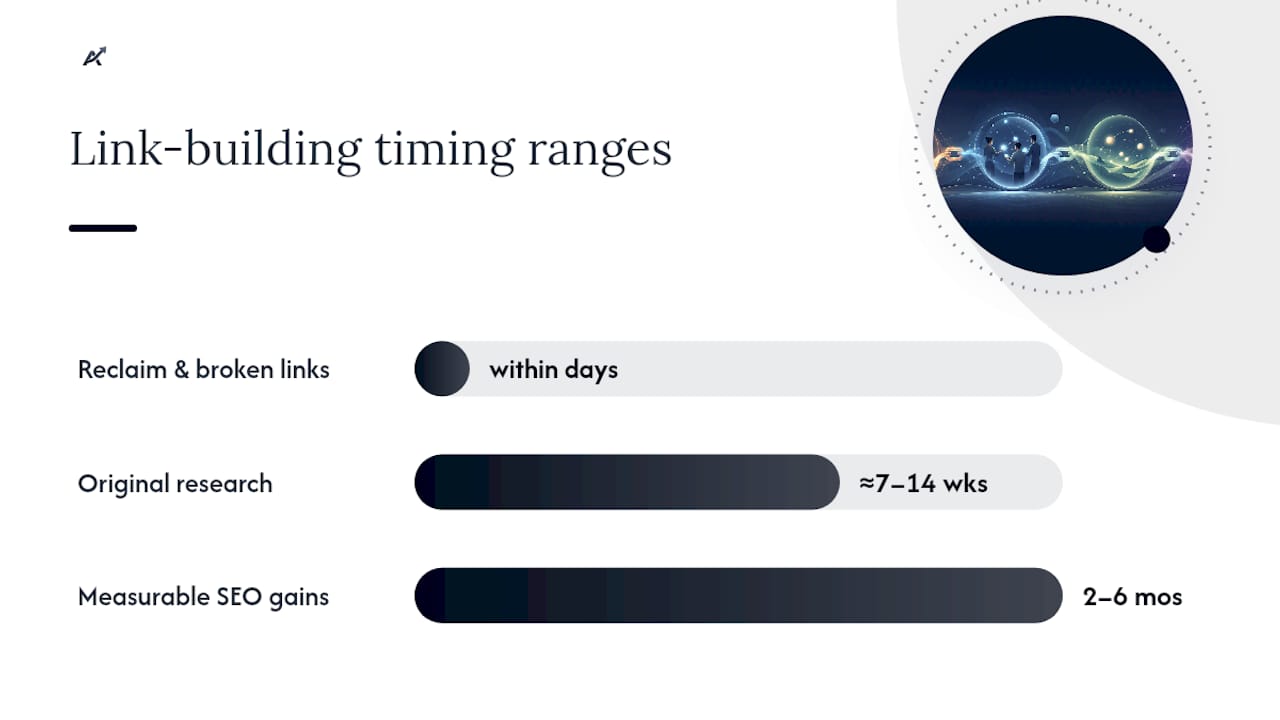
Effort expectations vary by tactic. Mention reclamation and simple broken-link outreach can produce a link within days of a successful pitch. A data study, by contrast, might take three to six weeks to build and analyze properly, then another one to two months of active outreach before the citations start rolling in. That's not a flaw in the strategy. It's the tradeoff for links that don't disappear the next time Google adjusts its algorithm.
Cost, in either time or money, scales with ambition. A solo operator reclaiming mentions and fixing broken links can do meaningful work in a few hours a week. A full digital PR campaign around an original research report usually needs either a dedicated person or an agency, plus design and outreach time measured in weeks, not hours. Set expectations accordingly before committing to a tactic, and budget for the slower-but-durable techniques rather than treating them as quick wins.
Why I'd Rather Wait Six Months for a Real Link
The uncomfortable truth about link building is that most people want a shortcut that doesn't exist. Every scheme promising fast followed links is trading your domain's long-term standing for a short-term number that Google actively hunts for and removes. I'd rather earn ten links slowly than buy a hundred that vanish in the next spam update.
If you're starting today, pick two tactics: mention reclamation and one linkable asset. Measure both for 90 days before adding a third.
— Task
Get Ethical Backlinks Without the Outreach Grind
Running a link building program the right way means research, writing, outreach, and tracking, week after week. Some platforms handle the heavy lifting differently: instead of hiring an outreach team or blocking off your own hours for pitch emails, you can access consistent, brand-matched blog content published straight to your domain, backed by a collaborative link network that grows stronger with every new subscriber.
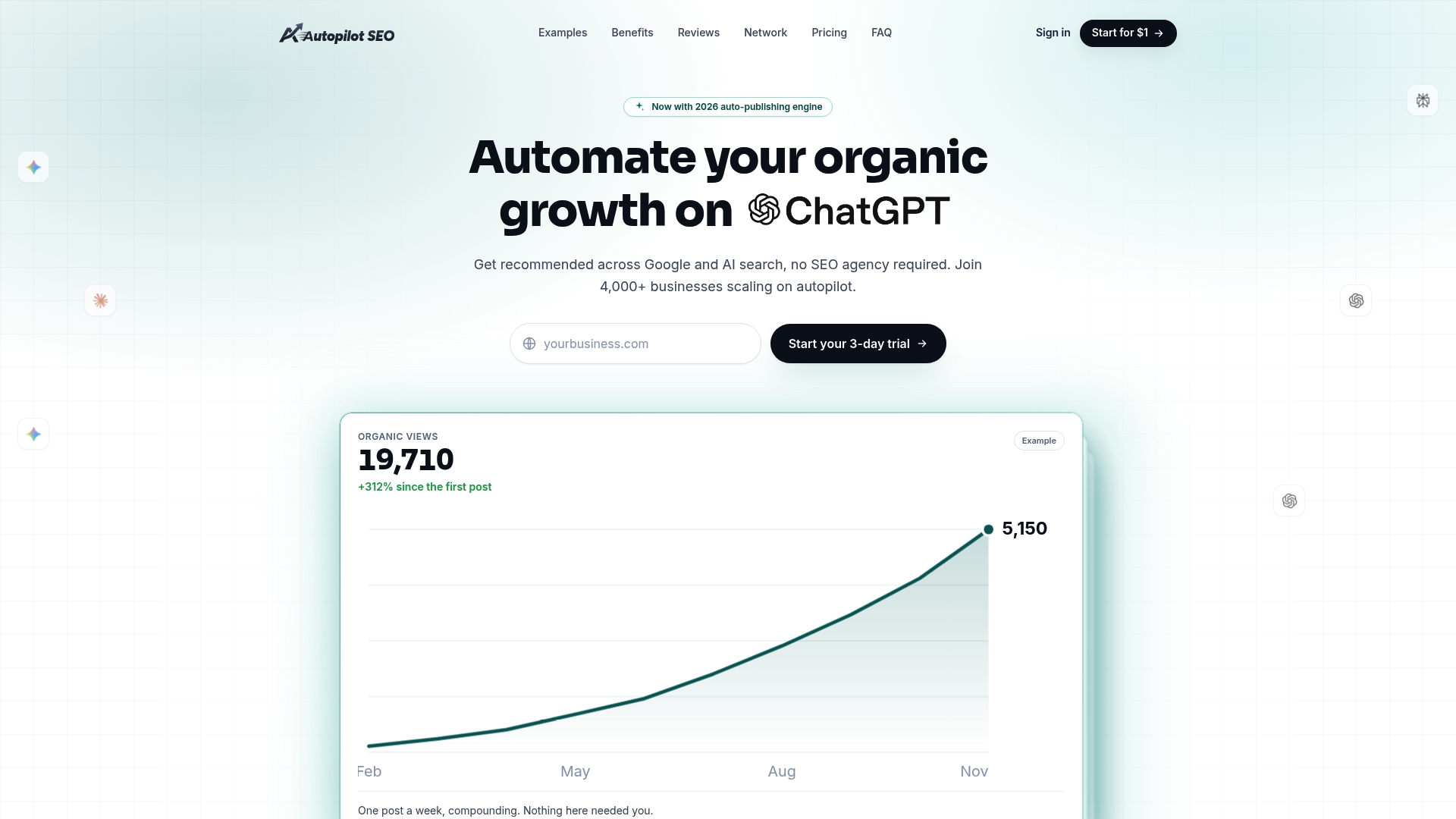
The platform maps directly onto the same 4-step system covered above. It handles asset creation on autopilot, taps its outreach network for backlinks instead of leaving you to cold-email journalists, and gives you measurable traffic reporting so you can track ROI the same way you'd track a manual campaign. If you're evaluating any vendor for this work, white hat or otherwise, ask the same questions this article raised about link sourcing and transparency. Check the pricing page to see which plan fits your posting cadence, and start your trial to see the first assets and links land on your own domain.
Sources
- What is white hat link building? | Definition from TechTarget
- 14 creative (but 100% white hat!) ways to earn backlinks
- White hat link building: 8 strategies that work in 2026 (Crazy Egg)
- White Hat SEO: The Definitive Guide - Backlinko